40 cultural organisations in Leuven are committed to climate action
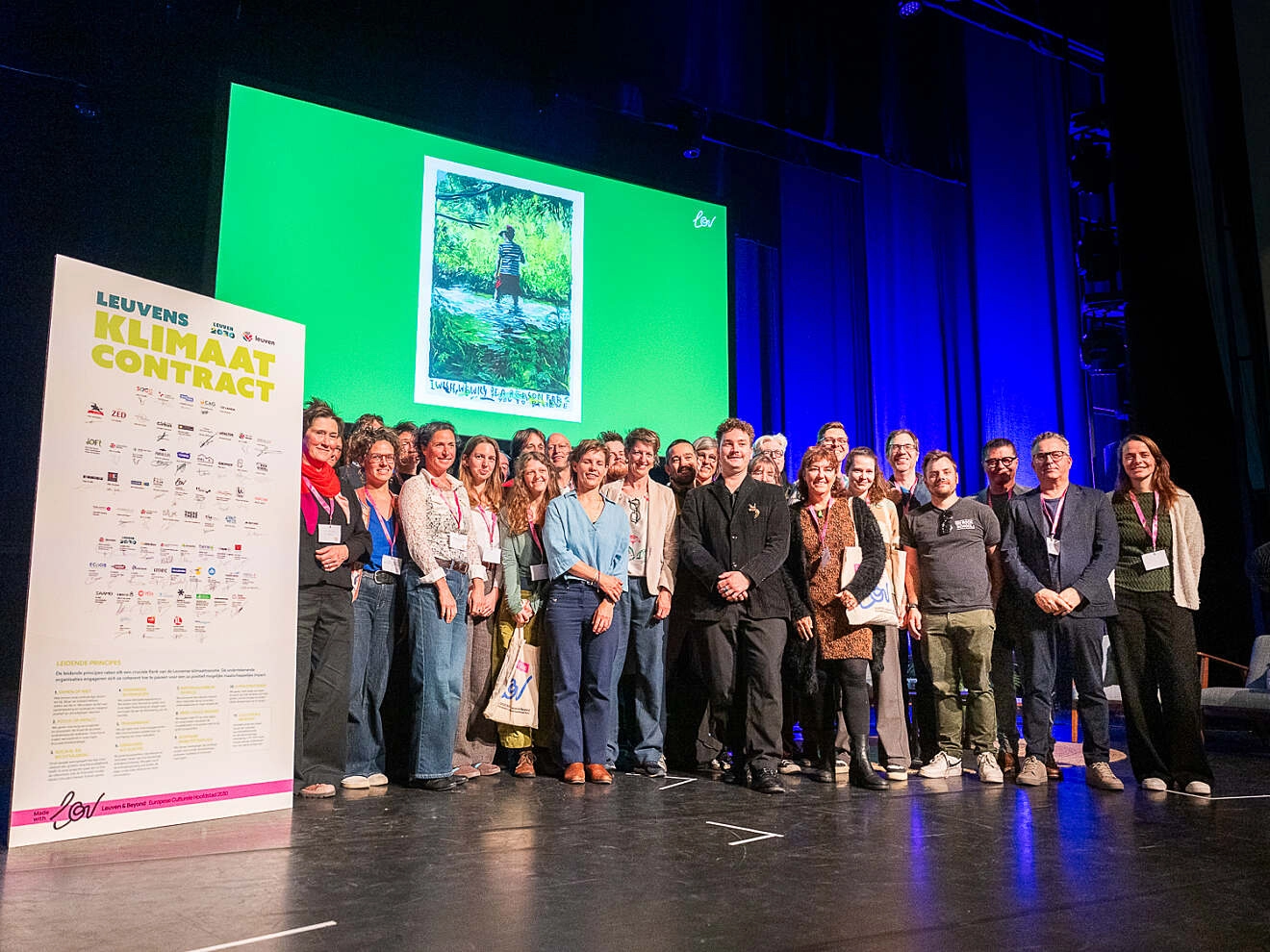
On 19 May 2026, 40 cultural organisations in Leuven endorsed the ten guiding principles for climate action set out in the Leuven Climate Contract. In doing so, they have committed to actively working towards a future-proof way of operating in the coming years, with a focus on climate, well-being and social impact. They are following in the footsteps of 29 organisations, businesses and institutions in Leuven that went before them.
Through their commitment, the cultural organisations are also highlighting something else: the climate transition is not just about technology, energy or infrastructure. Culture also plays an important role in how people view social change and the best possible future for our city.
Culture as a driver of change
Art, music, theatre, literature and heritage give meaning to social change. They can challenge, inspire, move and help us find courage. They make complex issues discussable, help us to imagine alternative futures and fuel public debate. And perhaps even more importantly: culture helps people feel part of change, rather than simply watching from the sidelines.
"Culture broadens our perspective. Through stories, images and experiences, it can make social challenges tangible and encourage people to reflect on what is at stake. The climate transition also becomes more concrete in this way: culture brings to the fore consequences, emotions and visions of the future that would otherwise often remain invisible or difficult to grasp.” – Peter Bary, Director of General Management, M Leuven
It is precisely this shared vision of a future in which everyone can live well that is crucial to the success of Leuven’s climate transition. Because the choices we make today are not just about emissions or energy consumption, but also about health, safety, air quality, affordability and quality of life in the city of tomorrow.
Using culture as a catalyst, we want to bring people together in a different way and encourage them to reflect on the challenges facing the world. Not from a political or economic perspective, but through shared cultural experiences, imagination &meaning.
These guiding principles help organisations to embed climate action systematically into their operations. Not as a temporary project, but as a way of working that informs decisions, partnerships and day-to-day choices.
More than 30 partners in Leuven are already working together on concrete breakthrough projects relating to energy, renovation, mobility, climate adaptation and the circular economy. These projects help to make Leuven more resilient, healthier and better prepared for the future. But to create a real impact, more is needed than just individual projects. Organisations themselves must also evolve.
The Leuven Climate Contract and LOV2030: a logical connection
It is no coincidence that the signing took place during the Summit of LOV. Through HumanNature, the programme that secured us the title of European Capital of Culture 2030, LOV2030 aims to demonstrate how culture can contribute to a city in which people, society and the living environment are more closely connected.
The team behind the Leuven Climate Contract (including the City of Leuven and Leuven 2030) and that of LOV2030 share a similar conviction: major societal challenges require cross-sectoral collaboration. By working together, we can create a movement that extends beyond individual organisations or projects, and accelerate progress together.
We are therefore actively seeking links between the LOV2030 programme and the Leuven Climate Contract. For example, several projects from the Climate Contract were also included in the LOV2030 bid book.
LOV2030 is rooted in the relationship between people and nature. Sustainability also means building together: from the ground up, through co-creation, in partnership with people. That is why LOV2030 and the Leuven Climate Contract feel closely linked.
This synergy between LOV2030 and the Leuven Climate Contract also makes Leuven unique in Europe today. Few other European cities bring the climate transition and the cultural sector together in this way. In Leuven, artists, cultural centres, residents, researchers, businesses and policymakers are working together to shape a vision of what a just, future-proof and hopeful city could look like.
This article was written by Leuven 2030 and originally appeared as a blog post on their website.
More Stories


LOVrun.
